
Toddler Nature Art Activities Vs
📖 Table of Contents
- What Are Toddler Nature Art Activities, Anyway?
- Why Nature-Based Art Is Better Than Traditional Art for Toddlers
- How to Choose the Right Nature Art Activities for Your Toddler
- The Benefits of Nature Art for Toddlers’ Development
- How to Make Nature Art Activities More Interactive and Engaging
- How to Adapt Nature Art Activities for Different Seasons and Environments
- How to Encourage Your Toddler to Stay Engaged With Nature Art Activities
- Make It Your Way
- Frequently Asked Questions
I remember the first time I took my two-year-old daughter to a park, and she stopped dead in her tracks to pick up a perfectly round acorn. Her eyes lit up, and she held it like it was the most precious thing in the world. It was then that I realized how powerful nature could be in a toddler's learning journey. I began exploring toddler nature art activities. While I initially thought they were just another 'fun thing to do,' I quickly learned that they're a gateway to creativity, curiosity, and connection with the world around them. These activities are more than just play—they're the foundation of early learning.[1]
Toddler nature art activities can often be confused with generic art projects, but they're much more than that. They’re rooted in the immediate environment, using leaves, pebbles, flowers, and even dirt to spark imagination and sensory exploration. These activities are not only messy and delightful, but they also help toddlers understand textures, colors, and shapes in a very real, tangible way. I discovered that the best part was how easily these activities could be adapted to different settings, whether it's in the backyard, on a hike, or even at a beach.[2]
There are so many toddler nature art activities out there, each with its own unique benefits and challenges. Some are better suited for short attention spans, others for long days out in the wild. It's important to understand the difference between them, and that's exactly what this article is for. Whether you're a first-time parent or a seasoned one looking for more options, this guide will help you choose the right activities that align with your child's interests, your family's rhythm. Your own personal style as a parent.[3]
Why You'll Love This Guide to Toddler Nature Art Activities
- Encourages sensory exploration and creativity through hands-on, natural materials
- Provides flexible, adaptable activities that can be done anywhere, anytime
- Helps toddlers build early cognitive, motor, and language skills in a fun and engaging way
- Offers a unique way to bond with your child while fostering a love for the natural world
What Are Toddler Nature Art Activities, Anyway?
As of September 2026, these activities are not about creating traditional art, like painting or drawing. Instead, they use natural materials like leaves, rocks, flowers, and even dirt to create art that is both sensory-rich and educational. My daughter’s favorite was collecting pebbles and arranging them in patterns on the kitchen floor, a simple but deeply engaging task that helped her understand spatial relationships.[4]
I learned that these activities are perfect for toddlers because they’re open-ended and allow for a lot of self-expression. Whether they're making a picture with sticks or arranging flowers in a circle, toddlers are exploring the world in a way that’s meaningful to them. I found that these activities helped her develop fine motor skills and problem-solving abilities without any pressure or expectation.
It's also important to note that these activities are inherently educational. Toddlers learn about colors, shapes, textures, and even basic science concepts like gravity and balance as they play. I was amazed to see how quickly my daughter began recognizing different types of leaves and flowers, and how she started using them to describe the world around us.
Instead of buying art supplies, look for natural materials in your own backyard. Twigs, leaves, and stones are all perfect for creating unique and educational art.
Part of our Nature themed toddler activities mistakes guide.
Why Nature-Based Art Is Better Than Traditional Art for Toddlers

Traditional art materials like crayons and paper are great, but they don't offer the same level of sensory input as nature. My daughter found it much more engaging to press leaves into clay than to color in a picture book. The smell, texture, and feel of natural materials helped her connect with the art in a way that traditional materials couldn't provide.
Nature art also encourages exploration and discovery. When I took my daughter to a local park, she found a small spiderweb and asked me what it was. I let her examine it, and she made a simple drawing of it using a twig and some stones. It was a moment of learning that felt natural and unforced.
Another benefit of nature-based art is that it promotes creativity in ways that are unstructured and unconfined. My daughter once used a handful of pinecones and pebbles to build a miniature 'castle' in the sandbox. It was messy, but it was also incredibly creative and allowed her to think outside the box.
Nature art allows toddlers to explore the world in a way that's both fun and educational.
Related: Cheap nature themed toddler activities
Related: Toddler Nature Art Activities Alternatives
How to Choose the Right Nature Art Activities for Your Toddler
I found that my daughter was more interested in collecting things than she was in arranging them, so I adjusted my approach. I started taking her on nature walks where we would collect items like leaves, flowers, and sticks. Later, we would sit together and create simple art projects using those items.
It's important to match the activity to your toddler's attention span and energy level. Some toddlers might be more interested in a quick activity like pressing leaves into clay, while others may enjoy a longer project like making a collage with twigs and leaves.
I also found that the environment played a big role in choosing the right activity. If we were at the beach, I focused on collecting seashells and using them to create art. If we were at the park, I focused on leaves and flowers. It all depended on what was available and what my daughter was interested in at the moment.
Let your toddler guide the activity. If they're more interested in collecting than creating, that's okay. You can always revisit the activity later.
“I remember the first time I took my two-year-old daughter to a park, and she stopped dead in her tracks to pick up a perfectly…”— Toddler Nature Journaling Themes editors
Related: Affordable nature themed toddler room
The Benefits of Nature Art for Toddlers’ Development
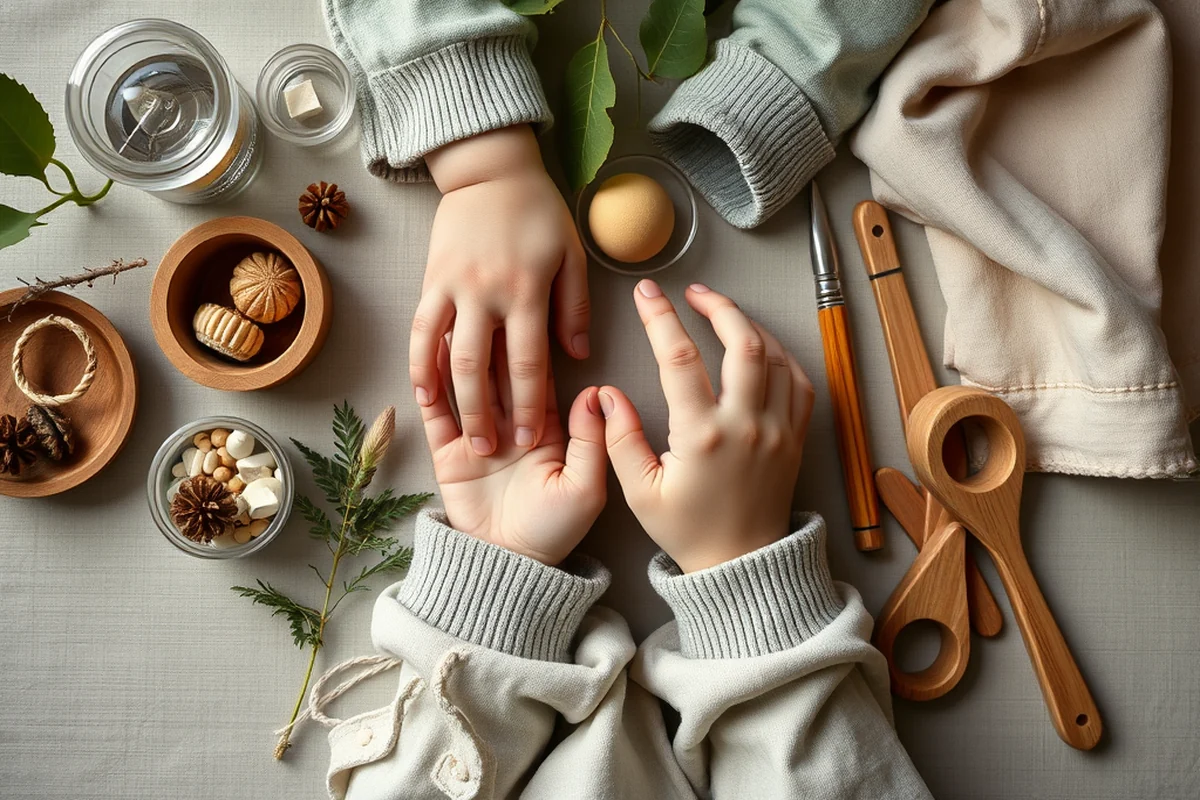
I noticed that my daughter's fine motor skills improved significantly after we started doing nature art activities. Pressing leaves into clay, picking up pebbles, and arranging sticks helped her develop hand-eye coordination and dexterity.
Nature art also helped my daughter develop language skills. We started using words like 'big,' 'small,' 'round,' and 'pointy' as we described the natural materials we found. This helped her learn to express herself more clearly and use descriptive language.
Another benefit of nature art is that it encourages problem-solving and spatial reasoning. My daughter once tried to balance pebbles on a stick to make a bridge, and she had to figure out how to make it stable. It was a simple activity, but it helped her develop critical thinking skills.
Related: Best toddler nature activities
How to Make Nature Art Activities More Interactive and Engaging
I found that involving my toddler in the process of collecting and creating made the activity much more engaging. Instead of just letting her pick up items, I would ask her questions like, 'What do you think this leaf looks like?' or 'Can you find a rock that’s round?'
I also discovered that using simple prompts helped her stay focused and interested. For example, I would say, 'Let’s make a picture of a tree with these leaves.' This gave her a goal to work toward and helped keep her engaged.
I also found that using storytelling made the activity more engaging. I would create a simple story about the art we were making, like, 'This is a picture of a magical forest,' and then we would add details to the story as we created the artwork together.
Related: Top toddler nature activities
How to Adapt Nature Art Activities for Different Seasons and Environments
I found that adapting nature art activities to the season helped keep my daughter interested and engaged. In the fall, we focused on collecting leaves and using them to create art. In the winter, we used pinecones and snowflakes.
I also found that different environments offered different opportunities for nature art. At the beach, we used seashells and sand. In the park, we used leaves and flowers. In the forest, we used twigs and rocks.
I also discovered that adapting the activity to the time of day helped keep my daughter interested. In the morning, we would take a walk and collect items. In the afternoon, we would sit and create art with the items we had collected.
Adapting nature art activities to different seasons and environments keeps toddlers engaged and learning.
Related: Best nature themed toddler bedroom
How to Encourage Your Toddler to Stay Engaged With Nature Art Activities
I found that my daughter was more interested in nature art activities when I was involved and present. I would sit with her and help her create the art, and I would ask her questions as we worked together.
I also found that setting up a simple space for nature art helped my daughter stay engaged. I would lay out a small table with a piece of paper and a bowl of clay, and I would let her know that we were going to make some art together.
I also discovered that involving my daughter in the planning helped her stay engaged. I would ask her what she wanted to make, and I would help her find the materials she needed. This gave her a sense of ownership and made her more interested in the activity.
🌿 Gentle Nature Art
A slower, more sensory-rich approach that focuses on exploring and touching natural materials without pressure or expectations.
⚡ Fast-Track Nature Art
A quick and easy approach that focuses on getting the most out of a short time, like a park visit or a beach day.
🧳 Travel/away-from-home Nature Art
A portable approach that focuses on using items you can carry with you, like a small bag of natural materials you've collected beforehand.
👯♀️ Multiples Nature Art
A great approach for families with more than one toddler, focusing on shared activities that allow multiple children to engage and create together.
🔄 Regression Reset Nature Art
A reset approach that helps toddlers who may have become disengaged or frustrated with art activities, focusing on simplicity and reconnection.
| The mistake | Why it happens | The fix |
|---|---|---|
| Forcing a toddler to do an activity they're not interested in. | This can lead to frustration and disengagement, making the activity less effective and less enjoyable. | Let your toddler lead the activity and choose what they want to do. |
| Using too many materials at once. | This can overwhelm your toddler and make the activity too complicated to understand or enjoy. | Start with a few simple materials and gradually add more as your toddler becomes more engaged. |
| Not being involved in the process. | Your toddler may not be as engaged or interested if you're not involved in the activity. | Spend time with your toddler and participate in the activity together. |
| Not adapting the activity to your toddler’s interests. | If your toddler is not interested in the activity, they may not engage with it or learn from it. | Choose an activity that aligns with your toddler’s interests and developmental stage. |
Toddler Nature Art Activities Vs
Common Questions
What materials do I need for toddler nature art activities?
How long should I spend on toddler nature art activities?
Can I do nature art activities with my toddler at home?
What if my toddler doesn’t want to participate in nature art activities?
References
- Nature's Way Preschool | Austin Parks and Recreation (austintexas.gov)
- Activities: Crafts, Games, Coloring Books, & More (dlnr.hawaii.gov)
- Take A Child Outside | DNCR K12 - NC.gov (dncr.k12.nc.gov)
- Activities for Kids and Families | Virginia Department of Forestry (dof.virginia.gov)
Cite this guide
Toddler Nature Journaling Themes (2026). Toddler Nature Art Activities Vs. https://naturemarks.com/toddler-nature-art-activities-vs/
Feel free to cite or share this guide.