
Toddler Nature Set Alternatives
📖 Table of Contents
- Getting Started with Nature Exploration
- Using Everyday Items to Create a Nature Set
- Incorporating Sensory Play into Nature Exploration
- Creating a Nature Journal with Simple Materials
- Involving the Whole Family in Nature Exploration
- Making the Most of Nature Walks
- Encouraging a Love for Nature Through Everyday Moments
- Make It Your Way
- Frequently Asked Questions
I remember the day my toddler asked me, 'Why do leaves fall?' It was a quiet afternoon in our backyard, and I realized how much the world looked through his curious eyes. We didn't have a toddler nature set at the time, but we had something even better: the ability to explore the world together. That moment taught me how powerful hands-on learning can be, even without a branded product. Toddler nature set alternatives are not just about saving money—they're about making the most of what's around us, turning every walk, every park visit, and every backyard moment into a lesson in wonder.
I'm not saying branded toddler nature sets don't have their place. They can be fun and educational. But I've found that the best experiences come from using what we already have. A few sticks, some leaves, and a bit of time with my child have led to more meaningful connections than any kit ever could. The word 'alternatives' might sound like a compromise, but to me, it's an invitation to be more creative, more present, and more in tune with the world we live in.
Toddler nature set alternatives can feel daunting at first, especially if you're used to buying everything. But I've learned that even the simplest of items can spark a child's imagination and curiosity. Whether it's collecting pebbles on a hike or making a leaf collage with paper and glue, these activities are not only affordable but also deeply rewarding. The real magic isn't in the product—it's in the time we spend together and the lessons we learn along the way.[1]
Why You'll Love This Approach
- It's budget-friendly and accessible to all families.
- Encourages creativity and imaginative play.
- Builds a deeper connection with your child and the natural world.
- Offers endless opportunities for learning and exploration.
Getting Started with Nature Exploration
As of October 2026, Finding a place where your toddler can safely explore is the first step in creating a nature-rich experience. I've discovered that even a small patch of grass or a few trees in the neighborhood can become a treasure trove of learning. The key is to make the environment feel safe and inviting, so your toddler can move freely and at their own pace.
In our case, we started with the local community garden. It had a variety of plants, bugs, and even a small pond. My toddler was fascinated by the way the butterflies fluttered from flower to flower, and he asked so many questions that I hadn't expected. It was a reminder that the world is full of wonders waiting to be discovered.
One of the best parts of starting with a local space is that it can be revisited again and again. Each time, there are new things to find, new questions to ask, and new ways to learn. This consistency helps build a sense of familiarity and comfort, which is essential for young children.
Choose a space that's close to home and familiar. It'll help your toddler feel secure and excited about exploring.
Part of our Toddler nature set examples guide.
Using Everyday Items to Create a Nature Set
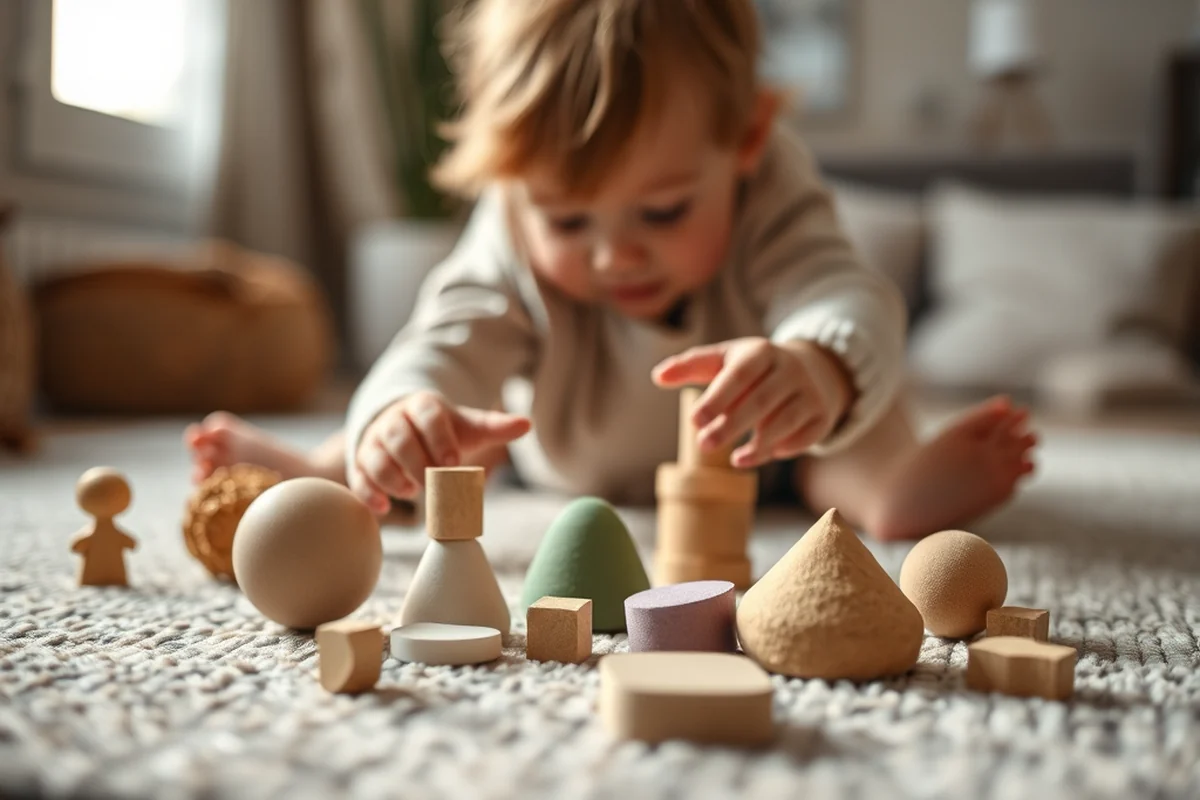
I never expected that a few items from my kitchen and garage could transform into a nature exploration kit. A small container for collecting leaves, a magnifying glass from the toy bin, and even a cardboard box to hold rocks became our favorite tools for discovery. These items were not only affordable but also perfect for my toddler's growing curiosity.
We used an old Tupperware container to collect pebbles, leaves, and twigs during our walks. My toddler loved pressing the leaves flat and trying to identify them by shape. The magnifying glass, which we had for science projects, became a favorite tool for examining the intricate details of a beetle's shell.
These makeshift tools didn't only make our adventures more engaging—they also helped my toddler understand that learning can happen anywhere. It was a powerful reminder that we don't need expensive toys to make learning fun and meaningful.
Learning doesn't need a price tag—just a curious toddler and a few everyday items.
Related: Top toddler nature set
Related: Toddler nature set benefits
Incorporating Sensory Play into Nature Exploration
Sensory play is one of the most effective ways to engage a toddler's imagination and curiosity. I've found that allowing my toddler to touch, smell, and even taste (in a safe way) natural items can create a deeper connection to the world around them. This kind of play is not only educational but also incredibly fun.
During one of our walks, we came across a patch of clover. I let my toddler pick the flowers and smell them. He was fascinated by the way the leaves smelled and the way the flowers felt in his hands. We even made a small pile of leaves and let the rain wash over them, which led to a whole new round of questions about water and dirt.
Sensory play doesn't require any special tools or expensive kits. It just requires being present and allowing your toddler to explore at their own pace. Whether it's feeling the texture of moss or listening to the sound of a bird, these moments can be the most memorable ones.
Follow your toddler's curiosity—let them explore what interests them most. It builds confidence and keeps them engaged.
“I remember the day my toddler asked me, 'Why do leaves fall?' It was a quiet afternoon in our backyard, and I realized how much…”— Toddler Nature Journaling Themes editors
Related: Cheap toddler nature set
Creating a Nature Journal with Simple Materials
I started a nature journal with my toddler using just a notebook and some crayons we had lying around. We filled the pages with drawings of the things we saw on our walks, like leaves, birds, and rocks. It was a way for us to document our discoveries and revisit them later.
Each time we went out, we'd look for something new to draw. We drew a ladybug we found on a flower, a tree with interesting bark, and even a puddle we stepped in. My toddler was excited to show his drawings to family members, and it became a fun way for us to share our adventures.
Creating a nature journal is a great way to encourage creativity and observation skills. It doesn't need to be perfect—just a way for your toddler to express what they've seen and learned. The key is to make it a fun and engaging activity.
Related: Naturalist family children
Involving the Whole Family in Nature Exploration
Involving the whole family in nature exploration has been one of the most rewarding experiences for us. It's a chance for everyone to bond, learn, and connect with the natural world. My toddler especially enjoys seeing his parents excited about the same things he is.
We've made it a tradition to go on a nature walk every weekend. We take turns leading the way and point out interesting things we find. My toddler loves being the one to find the biggest leaf or the most unusual rock. It's a way for him to feel proud and involved.
These shared experiences create lasting memories and help build a sense of family unity. They also reinforce the idea that learning is something we can do together. It's a powerful reminder that education doesn't have to be confined to a classroom.
Related: Best toddler nature set
Making the Most of Nature Walks
I've found that nature walks are one of the best ways to help my toddler connect with the world. They're a chance for us to move, explore, and discover new things together. Whether we're on a short walk around the neighborhood or a longer hike in the woods, these moments are always special.
During our walks, we've discovered frogs in the pond, butterflies on the flowers, and even a fox that was watching us from a distance. My toddler loves pointing out these creatures and asking questions about them. It's a way for us to learn and grow together.
These walks are also a great way to help my toddler develop a sense of curiosity and wonder. They remind me that the world is full of surprises and that even the smallest discoveries can be the most meaningful.
Every nature walk is an adventure—just be sure to bring a curious toddler.
Encouraging a Love for Nature Through Everyday Moments
I've learned that the best way to help my toddler develop a love for nature is by being present and involved in the small moments of daily life. Whether we're picking up leaves on the way to the park or watching the clouds change shape in the sky, these moments are the ones that leave the deepest impression.
These little experiences help my toddler develop a sense of wonder and curiosity about the world. They also help me connect with him in a meaningful way. It's amazing how something as simple as watching the wind blow through the trees can lead to a whole conversation about nature.
These everyday moments are what make the world feel magical. They remind me that learning doesn't have to be complicated or expensive. It can be as simple as a shared moment with your child and a little bit of curiosity.
🌿 Gentle Nature Exploration
Focus on slow, sensory-rich experiences that allow your toddler to explore at their own pace.
🏃♂️ Fast-Track Nature Adventures
Ideal for busy families who want to make the most of short, high-energy nature sessions.
🌍 Travel/Out of Town Nature Exploration
Perfect for families on the move, using local parks and natural areas as your nature classroom.
👨👩👧👦 Multiple Toddlers or Siblings
Create a shared nature experience that engages all children and encourages teamwork and collaboration.
🔄 Regression Reset with Nature
Use nature to help your toddler reset and reconnect with the world during challenging times.
| The mistake | Why it happens | The fix |
|---|---|---|
| Assuming all nature activities must be expensive or require special tools. | This can limit your opportunities for exploration and make you feel like you need to buy a kit to have a meaningful experience. | Use what you have at home and explore locally. Nature is all around you, even in the smallest spaces. |
| Not allowing your toddler to lead the way during nature exploration. | This can make the experience feel more like a lesson and less like a shared adventure, which can dampen their curiosity and engagement. | Follow your toddler's interests and let them take the lead in exploring. It builds confidence and makes the experience more enjoyable. |
| Trying to overplan nature activities with too many rules and expectations. | This can make the experience feel more like a task and less like a fun, natural exploration. It can also overwhelm your toddler and reduce their interest. | |
| Not being present during nature time, which is essential for building connection and fostering curiosity. | When you're distracted or not fully engaged, it can reduce the quality of the experience and make it less meaningful for your toddler. | Make sure to put your phone away and be fully present. Your toddler will feel more connected and engaged when you're there with them. |
Toddler Nature Set Alternatives
Common Questions
How can I encourage my toddler to take an interest in nature?
What are some affordable ways to explore nature with my toddler?
How can I keep my toddler engaged during nature walks?
What should I do if my toddler is afraid of certain natural elements?
References
- A Multiple Case Study of Nature Center Preschools (digitalcommons.unl.edu)
Cite this guide
Toddler Nature Journaling Themes (2026). Toddler Nature Set Alternatives. https://naturemarks.com/toddler-nature-set-alternatives/
Feel free to cite or share this guide.