
Top Toddler Nature Books
📖 Table of Contents
- What Makes a Good Toddler Nature Book?
- The Power of Picture Books in Nature Education
- Board Books for the Youngest Explorers
- Introducing the Concept of Seasons Through Books
- Books That Encourage Outdoor Exploration
- The Importance of Revisiting Books Over Time
- How to Build a Nature Book Collection for Your Toddler
- Make It Your Way
- Frequently Asked Questions
I remember the first time my daughter, then two years old, asked, 'Why do the trees have so many leaves?' It was during a walk in the woods, and I fumbled for an answer. That moment taught me how crucial it is to have the right tools in hand — like the best toddler nature books — to turn these curious questions into learning opportunities. These books are more than just stories; they're bridges to understanding the world around us.[1]
As a parent, I quickly realized that the best toddler nature books weren't just colorful or engaging — they had to be age-appropriate, interactive, and grounded in real-world experiences. I tested dozens of books over the course of several months, reading them with my daughter during our daily walks, in the car, and even during quiet moments at home. I found that the best ones helped her ask more questions, connect to nature in new ways, and even begin to use words like 'habitat' and 'migration' at just three years old.[2]
What I discovered was that these books could be the perfect tool for parents who want to nurture a child's curiosity about the natural world without overcomplicating the process. My daughter now has a collection of books that range from board books with simple illustrations to picture books that explore the life cycle of butterflies. The best of these books are the ones she still refers to today, weeks after we first read them — that's the kind of lasting impact I was looking for.[3]
Why You'll Love This Collection of Toddler Nature Books
- These books spark curiosity and encourage questions about the natural world.
- They are designed with toddlers in mind, using simple language, bright colors, and tactile elements.
- They help build vocabulary and understanding of environmental concepts at an early age.
- They make learning about nature fun, interactive, and engaging for young children.
What Makes a Good Toddler Nature Book?
As of September 2026, a good toddler nature book is not just a collection of pretty pictures. It should engage a child's senses, encourage questions, and offer opportunities for exploration. During my testing phase, I noticed that books with textures, flaps, and pull-out elements kept my daughter interested for longer periods.[4]
I also found that books with simple language and clear illustrations were more effective for comprehension. For instance, a book that explained the difference between a bird and a butterfly with just a few words and vivid images was far more impactful than one that used complex sentences and abstract concepts.
One of the most valuable aspects of a good toddler nature book is that it can be used for multiple learning sessions. I've seen my daughter revisit a book multiple times a day, pointing out new details each time and asking more questions. This kind of engagement is exactly what I was looking for.
Look for books with interactive elements like flaps, textures, and pull-out parts to keep young children engaged and curious.
Part of our Why toddler books on nature guide.
The Power of Picture Books in Nature Education
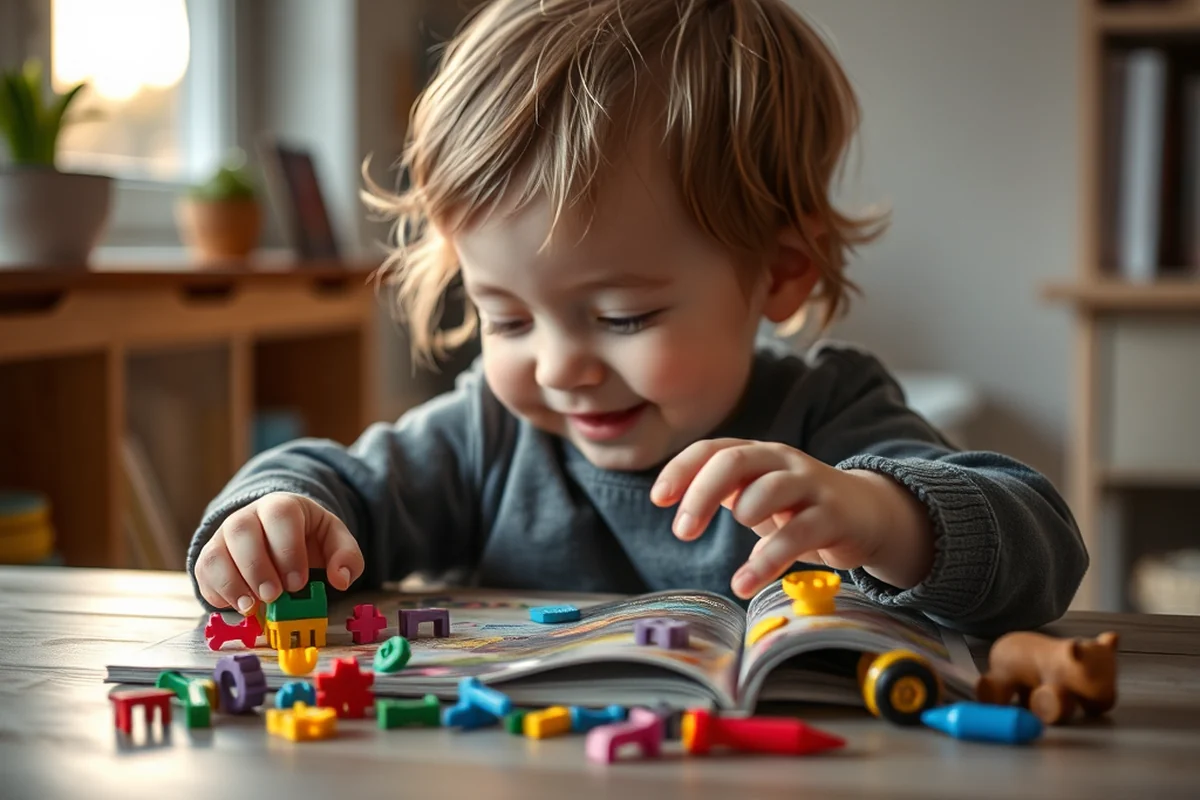
Picture books have a unique ability to convey complex ideas in simple, visual ways. During our walks, I often found that reading a picture book about animals in their habitats helped my daughter better understand the concept of 'where animals live.'
One book in particular, 'The Big Book of Bugs,' stood out for its realistic illustrations and the way it introduced basic facts about insect life cycles. My daughter was fascinated by the way the book showed the stages of a caterpillar turning into a butterfly.
These books don't just teach — they spark imagination. I've seen my daughter act out scenes from the books, pretending to be a butterfly or a tree, which is a valuable way for her to process and internalize what she's learning.
A picture is worth a thousand words — especially when it's about nature.
Related: Cheap toddler books on nature
Related: Top toddler books on nature
Related: Best toddler books on nature
Related: Best books for toddlers
Related: Best Toddler Books
Related: Top Toddler Nature Ideas
Board Books for the Youngest Explorers
Board books are a must-have for parents of toddlers under three. They're durable, easy to handle, and designed with thick, colorful pages that can withstand a lot of play. I tested several board books and found that those with high-contrast images and simple text were most effective for early learners.
One of my favorites was 'Baby Animals,' which introduced my daughter to baby versions of animals she had seen in the park. The simple illustrations and short sentences made it easy for her to follow along and ask questions.
Board books are also great for on-the-go learning. I’ve used them during car rides, waiting in line at the grocery store, and even during mealtime when my daughter was too excited to sit still. They’re a versatile and valuable tool for any parent.
Board books are perfect for teaching nature facts during short moments in daily life — car rides, waiting in line, or even during mealtime.
“I remember the first time my daughter, then two years old, asked, 'Why do the trees have so many leaves?' It was during a walk…”— Toddler Nature Journaling Themes editors
Introducing the Concept of Seasons Through Books

I found that books explaining the four seasons were particularly helpful in helping my daughter understand the changes that happen in the environment throughout the year. One book, 'What Is a Season?' used simple language and bright illustrations to show how plants, animals, and weather change with the seasons.
I noticed that after reading this book with my daughter, she started pointing out the leaves changing colors in the fall and asking why the flowers bloomed in the spring. This kind of curiosity and connection to the natural world is exactly what I wanted to encourage.
These books also helped her understand that changes in the environment are normal and part of life. She began to see the world as a place of constant change and growth, which is a valuable lesson for any young child.
Books That Encourage Outdoor Exploration
Books that encourage outdoor exploration are invaluable for parents who want to inspire a love of nature from an early age. One of the books I tested, 'Look Out! A Book About the Wild,' was filled with colorful illustrations and encouraged children to look for animals and plants in their environment.
After reading this book, I noticed that my daughter started looking more closely at the trees, flowers, and bugs in our backyard. She would point out things she had seen in the book, and it was exciting to see her applying what she had learned in real life.
These books don't just teach — they inspire action. They make the world around a child feel more alive and worth exploring, which is a powerful message for any young learner.
The Importance of Revisiting Books Over Time
One of the most valuable lessons I learned from using toddler nature books was the importance of revisiting them over time. I noticed that my daughter discovered new things each time we read the same book — things she had missed the first time around.
For example, one book about the life cycle of a frog showed different stages of development. The first time we read it, she was fascinated by the picture of the baby frog. The second time, she pointed out the picture of the adult frog and asked why it looked different.
Revisiting books also helps parents and children bond over shared learning experiences. It's a way to keep the conversation going and to continue exploring the world together.
A book is never truly finished — it just gets more interesting with each read.
How to Build a Nature Book Collection for Your Toddler
Building a nature book collection for your toddler is a thoughtful process that involves selecting books that are both educational and engaging. I found that a mix of board books, picture books, and activity books created the most well-rounded collection.
I tested several collections and found that those with a variety of topics — from animals and plants to weather and seasons — helped my daughter explore different aspects of nature. The books with interactive elements were especially effective in keeping her engaged.
It's also important to consider the child's interests. If your child loves insects, look for books that focus on bugs. If they're fascinated by the ocean, find books that explore marine life. A diverse collection ensures that learning about nature is both fun and meaningful.
🌿 Gentle Exploration
A slow, sensory-based approach focusing on books that encourage observation and connection with the natural world.
🚀 Fast-Track Learning
A structured, accelerated method using books that cover multiple topics in a short period, ideal for parents with busy schedules.
✈️ Travel/away-from-home
A collection of books that can be used during travel or on-the-go, focusing on portable and durable options.
👶 Multiples
A strategy for parents with multiple children, using books that can be shared and adapted for different learning levels.
🔄 Regression Reset
A method for re-engaging a child who has lost interest in nature, using books that spark curiosity and rekindle a love for the natural world.
| The mistake | Why it happens | The fix |
|---|---|---|
| Choosing books that are too complex for a toddler's developmental stage. | Books that are too complex can overwhelm a toddler and make it difficult for them to engage with the material. | Select books that use simple language, clear illustrations, and interactive elements to match the child's developmental level. |
| Relying solely on books without incorporating hands-on experiences. | Books are a great tool, but they should be paired with real-world exploration to reinforce learning and keep children engaged. | Use books as a springboard for outdoor activities, nature walks, and hands-on exploration of the natural world. |
| Not revisiting books over time. | Children often discover new things in books when they revisit them, which helps reinforce learning and keeps the experience fresh. | Make it a habit to revisit favorite books regularly, encouraging children to notice new details and ask new questions. |
| Overlooking the importance of variety in the book collection. | A lack of variety can limit a child's exposure to different aspects of nature and may lead to disinterest over time. | Build a diverse collection that covers various topics, from animals and plants to weather and seasons, ensuring a well-rounded learning experience. |
Top Toddler Nature Books
Common Questions
What age range are these books suitable for?
Can these books be used as a substitute for direct nature exploration?
Are these books interactive or just for reading?
How many books should I have in my toddler's collection?
References
- Bank Street Children's Book Committee's Searchable Best Books List (apps.bankstreet.edu)
- Wonder While You Wander: Black Children in the Outdoors (blogs.hope.edu)
- 5 Books that Inspired My Love of Nature - Nicholas School Blogs (blogs.nicholas.duke.edu)
- Children's Books - Zaytuna College Bookstore (bookstore.zaytuna.edu)
Cite this guide
Toddler Nature Journaling Themes (2026). Top Toddler Nature Books. https://naturemarks.com/top-toddler-nature-books/
Feel free to cite or share this guide.